GOOD: GOod Ontologies and how to Develop them

An ISWC 2026 tutorial to introduce modellers to the notion of the good, the bad, and the ugly of representing knowledge in an ontology, discuss reasons why they are not interchangeable, and provide principles, methods, and techniques to develop better ontologies.

Learn more Register

Overview

The purpose of this tutorial is to introduce the modeller to the notion of the good, the bad, and the ugly of representing knowledge in an ontology, reasons why they are not interchangeable, and provide principles, methods, and techniques to develop better ontologies.
The overall goal is thus to equip the participant with more and more advanced foundations for developing ontologies, as well as hands-on experience to practice with it.
Starting with some foundations of the representation languages and non-equivalent formalisation choices, the focus will be on methods and techniques to find & fix issues or to prevent mistakes upfront.

Learning outcomes

The expected learning outcomes are as follows:


Tutorial type and intended audience

This is an introductory tutorial at beginner and intermediate level, and specialised to modelling. The target audience is computer scientists and domain experts who have developed, are developing, or will have to develop ontologies. As prerequisites, some basic knowledge of OWL or Description logics is expected, and if not having tried developing an ontology yet, then at least be conversant with modelling other artefacts, such as UML, EER, or ORM conceptual data models or SHACL shapes and application profiles.

✕ Enlarged ontology visualization

Tutorial Schedule

Overview of the half-day tutorial topics and activities.

The presentation will interleave lecture-style presentation of content and hands-on individual or pair practice applying the theory, and will be topped off with a small contest on who/which team will find the most ways to fix or improve a `bad' ontology and a discussion about those solutions.

Resources

Slides, hands-on prac materials, and some background readings.

🗂

Slides

The slides will be available during the tutorial.

📄

Exercises

Descriptions of the practical tasks in a Jupyter/Colab notebook.

∀

OWL files for the exercises

The various OWL files used for the hands-on sessions and the challenge.

Background reading

A selection of background literature on ways to fix problems, improve on the knowledge represented, or avoid certain modelling issues from arising. You are not expected to have read all of it before the tutorial.

Textbooks

Keet, C.M. An Introduction to Ontology Engineering (2nd ed.). College Publications, volume 20, Second edition, September 2025. Specifically: Part 2 of the textbook (aimed at postgraduate students in computer science)

Keet, C.M. The What and How of Modelling Information and Knowledge: From Mind Maps to Ontologies. Springer, 2023. Specifically: Chapters 4-7 of the book, which is aimed at a professional audience that is relatively new to modelling. supplementary materials

Papers

Bernabé, C.H., Keet, C.M., Khan, Z.C., Mahlaza, Z. A method to improve alignments between domain and foundational ontologies. Proceedings of the 13th International Conference on Formal Ontology in Information Systems 2023 (FOIS'23). IOS Press, FAIA vol. 377, 125-139. 18-20 July Sherbrooke, Canada.

Davies, K., Keet, C.M., Lawrynowicz, A. More Effective Ontology Authoring with Test-Driven Development and the TDDonto2 tool. International Journal on Artificial Intelligence Tools, 2019, 28(7): 1950023. earlier free tech report

Ferré, S., Rudolph, S. Advocatus diaboli – exploratory enrichment of ontologies with negative constraints. Proceedings of the 18th International Conference on Knowledge Engineering and Knowledge Management (EKAW’12). A ten Teije et al. (eds.), Springer LNAI, vol. 7603. Oct 8-12, Galway, Ireland, pp. 42–56. free preprint

Glimm, B., Rudolph, S., Voelker, J. Integrated metamodeling and diagnosis in OWL 2. Proceedings of the 9th International Semantic Web Conference. Patel-Schneider, P.F. et al (eds.), LNCS, vol. 6496, Springer, 2010, pp. 257–272. free preprint

Keet, C.M. Detecting and Revising Flaws in OWL Object Property Expressions. Proceedings of 18th International Conference on Knowledge Engineering and Knowledge Management (EKAW'12), A. ten Teije et al. (Eds.). Oct 8-12, Galway, Ireland. Springer, LNAI 7603, 252-266. free preprint

Keet, C.M., Fernández-Reyes, F.C., Morales-González, A. Representing mereotopological relations in OWL ontologies with OntoPartS. Proceedings of the 9th Extended Semantic Web Conference (ESWC'12), E. Simperl et al. (eds.). Springer, LNCS 7295, 240-254. 27-31 May 2012, Heraklion, Crete, Greece. free preprint

Keet, C.M., Khan, Z.C. On the Roles of Competency Questions in Ontology Engineering. Proceedings of the 24th International Conference on Knowledge Engineering and Knowledge Management (EKAW'24). Springer LNAI vol. 15370, pp123–132. Amsterdam, Netherlands, November 26-28, 2024. free preprint

Keet, C.M., Suárez-Figueroa, M.C., Poveda-Villalón, M. Pitfalls in Ontologies and TIPS to Prevent Them. Knowledge Discovery, Knowledge Engineering and Knowledge Management: IC3K 2013 Selected Papers. A. Fred et al. (Eds.). Springer CCIS vol. 454, pp. 115-131, 2015. free preprint

Li, Y., Lambrix, P. Repairing Ontologies Using Weakening and Completing. Proceedings of the Extended Semantic Web Conference (ESWC'23). Pesquita, C., et al. (eds.). Springer LNCS vol 13870. Hersonissos, Crete, Greece, May 28 - June 1, 2023. free preprint

Lecturer

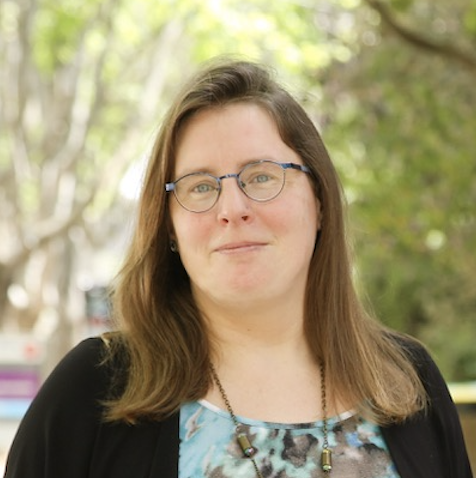
The tutorial is developed and will be presented by Maria Keet.

C. Maria Keet

Stellenbosch University, South Africa

Meaningfy, Luxembourg

C. Maria Keet is the R&D Manager at Meaningfy and an Extraordinary Professor at the Computer Science Division at Stellenbosch University, South Africa. She focuses her research on ontologies, ontology engineering, and conceptual data modelling, which has resulted in over 160 peer-reviewed publications at leading international conferences and journals. She was PI on a number of funded projects and has served in many Program Committees and reviewed for numerous journals; recently she was a General Chair of FOIS2025, and PC Chair for INLG2023 and ISWC2022 Resources Track, and she's an editorial board member of Applied Ontology and TGDK. She has over 16 years of teaching experience, supervised numerous postgraduate students to graduation, and wrote an award-winning textbook on ontology engineering.
Before returning to industry, Maria was an Associate Professor in Computer Science at the University of Cape Town, South Africa, Senior lecturer at the University of KwaZulu-Natal, and an Assistant Professor at the KRDB Research Centre, Free University of Bozen-Bolzano, Italy. She obtained a PhD in Computer Science at the KRDB Research Centre in 2008.

Funding

Yes, various sources

Attendance of ISWC is funded in part by the NRF, and there was funding for some of the work that led up to this tutorial, including, mainly from DOT4D, HPI, UCT, NSC Poland, NRF South Africa, STARWARS — EU Horizon 2020 (grant 101086252).

Meaningfy

Meaningfy, a Luxembourg-based SME, builds semantics-based interoperability solutions that enable a more efficient, transparent, and interconnected public (including EU organisations) and private sector.